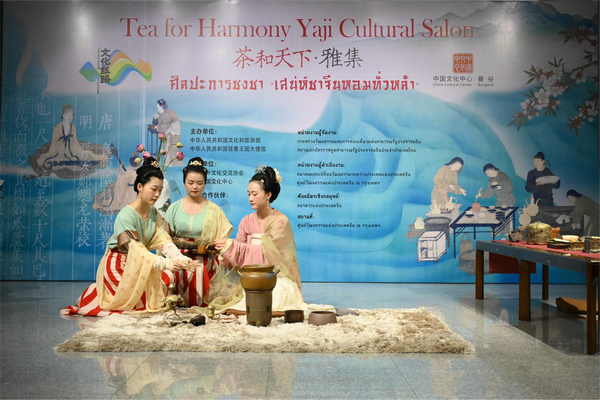
Tea for Harmony: Yaji Cultural Salon
Introduction
Tea for Harmony: Yaji Cultural Salon is a global event series launched by the Ministry of Culture and Tourism of China in collaboration with international organizations, Chinese embassies, consulates, and overseas China Cultural Centers and National Tourist Offices. The initiative aims to promote Chinese tea culture and facilitate cultural exchanges worldwide. The event highlights the rich heritage of tea in China and offers a glimpse into the refined and elegant lifestyle of traditional Chinese literati.
Background and Origins
The concept of Yaji, which translates to "elegant gathering," originates from an ancient form of social event where scholars and literati would convene to partake in a variety of cultural activities such as tea tasting, guqin playing, poetry composition, and recitation. These gatherings were integral to the lifestyle of traditional Chinese scholar-officials, providing a platform for intellectual and artistic exchange. The contemporary Yaji Cultural Salon seeks to recreate this atmosphere, allowing participants from various backgrounds to immerse themselves in the leisurely world of Chinese tea culture.
Event Highlights
The inaugural ceremony of the "Tea for Harmony: Yaji Cultural Salon" took place at Prince Kung's Palace Museum in May 2023. The event welcomed seventy-five resident foreign diplomats who were introduced to China's rich and diverse tea culture within the palace compound. Throughout the year, numerous salons were organized globally, featuring exhibitions, performances, demonstrations, and discussions on the historical and cultural significance of tea.
One notable event was held at the China Cultural Center in Bangkok, where a Chinese tea art performance and folk music concert were featured. The performance was based on tea sage Lu Yu's "Classic of Tea" from the Tang Dynasty, showcasing the depth of China's tea heritage. Prominent figures such as Chang Yumeng, Chinese cultural counselor to Thailand, and Que Xiaohua, director of the cultural center, attended along with about 400 local guests.
Cultural and Artistic Significance
Tea culture holds a crucial role in the social development of many civilizations along the Silk Road, promoting exchanges between people and fostering mutual learning. The Yaji Cultural Salon delves into the multifaceted nature of tea culture as a symbol of harmony, equilibrium, and inner peace. It emphasizes tea not only as a delightful beverage but also as an embodiment of cultural heritage, identity, and continuity.
Among the various tea stalls, Zhang Zhifeng's stall attracted significant attention. Known for his mastery of chabaixi, a tea art technique that involves whisking powdered tea with water to create foam, Zhang transforms cups of tea into artistic expressions, writing Chinese characters or painting delicate images on the surface. This technique, with origins in the Tang Dynasty and reaching its peak in the Song Dynasty, showcases the artistic and cultural value of traditional tea practices.








